Core Product · Walking Tail

Walking Self-Advancing Tail DWZY1000 (800) / 1200 (Y)

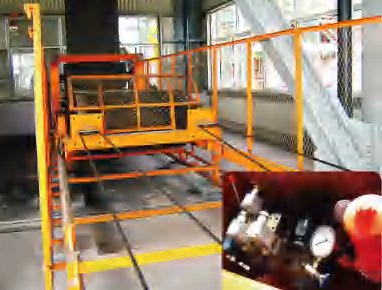
Self-advancing tail section for tunnel face development. Seven slide blocks correct frame bending and direction, six support cylinders plus one push cylinder provide the walking step. Eliminates anchored pull-and-relocate.

Home›Products›Walking Self-Advancing Tail
Application

What a self-advancing tail section changes

In longwall and tunnel development the cutting machine advances continuously, and the conveyor line has to follow. Traditionally this is done by anchored relocation — pulling the conveyor with roof bolts and winches. That means downtime, manual labour and a real risk of belt damage.

The walking self-advancing tail section DWZY1000 (800) / 1200 (Y) is designed for tunnel (roadheader) face development and moves the conveyor line by mechanical stepping — without dismantling the anchored holding system.

  • Seven slide blocks correct frame bending and direction
  • The same arrangement allows belt tracking adjustment
  • Walking drive: six support cylinders and one push cylinder
  • External travel rails on both sides plus a self-moving carriage
  • Slide blocks allow the frame to be shifted left or right at any time
  • Pump station carriage and cable reel carriage travel with the frame
  • Rapid advance and correct overlap with the roadheader second conveyor and the rear belt conveyor tail
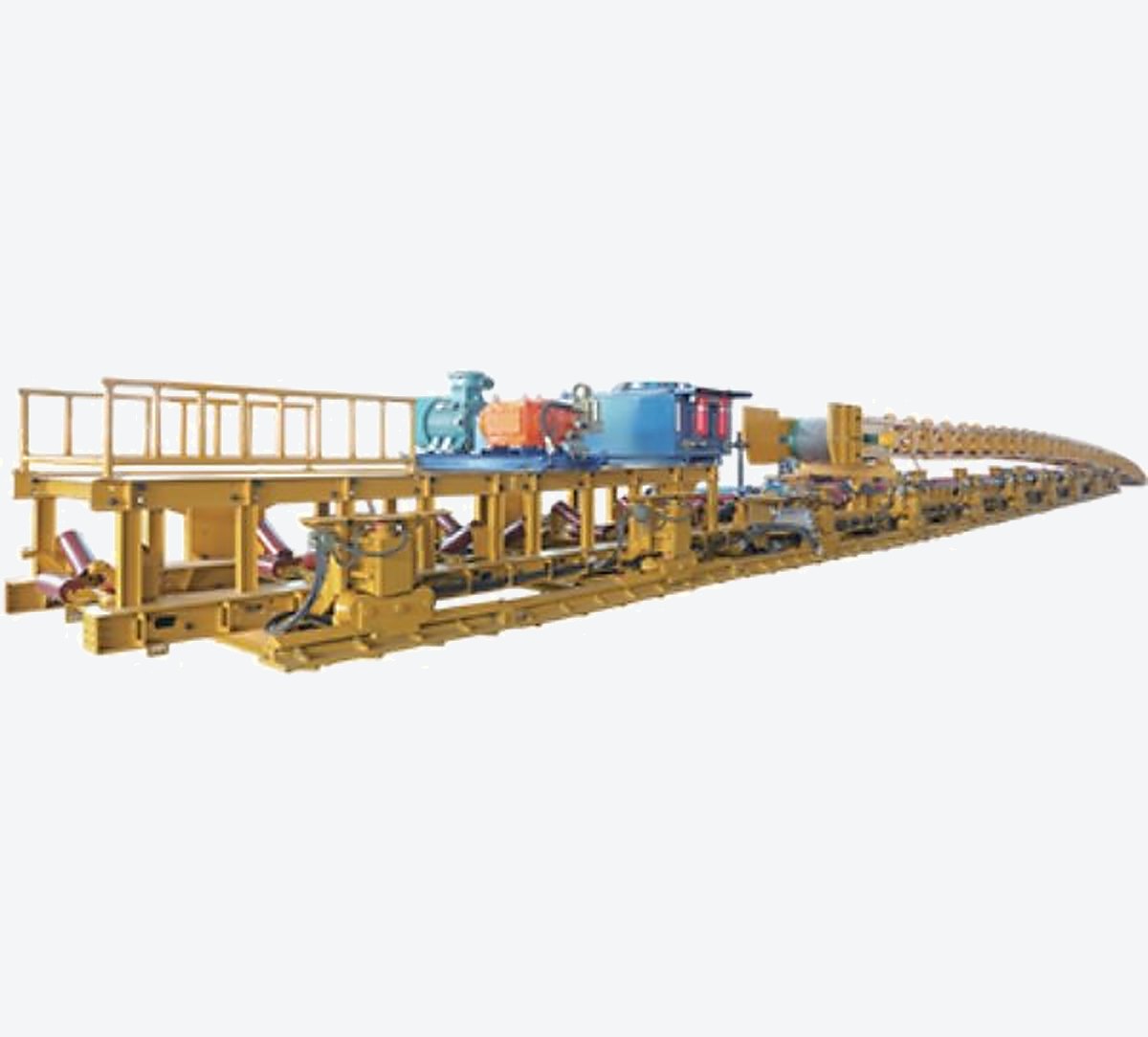
Walking self-advancing tail DWZY1000 — general view
Construction

Main assemblies

Can be combined with conveyor structures of various types.

Guide rails and slide blocks

Travel rails on both sides and seven sets of slide blocks correct frame bending and direction and regulate belt tracking.

Self-moving carriage

The carriage travels along the rails and provides the mechanical step. Six support cylinders and the push cylinder form the walking drive.

Push cylinder

One push cylinder performs the main forward movement of the frame.

Frame and tail base

Load-bearing frame with the tail base — carries the belt load and the tensioning assembly.

Second conveyor head carriage

Carriage for the head of the roadheader second (material) conveyor — provides jointing and overlap of the two lines.

Hydraulic control system

4+2 hydraulic valve, directional valves and a hydraulic lock on every cylinder.

Hydraulic control

Hydraulic control system

High-pressure emulsion from the working face is the working medium. Control is available at both the head and the tail end.

Supply

High-pressure emulsion

The hydraulic medium is high-pressure emulsion from the working face — the standard power source available at a coal mine.

Distribution

4+2 hydraulic valve

The six-section 4+2 valve controls the self-moving carriage, the travel rails and the slide blocks.

Safety

Hydraulic lock on every cylinder

Every hydraulic cylinder is fitted with a hydraulic lock — the frame cannot descend under its own weight in any position.

Operation

Two control stations

Control is available at either the head or the tail end, so the operator can choose the convenient position.

Safety as a design feature. Hydraulic locks on every cylinder prevent the frame from sliding down by itself if system pressure is lost — this is standard construction, not an option.
Technical specifications

Walking Self-Advancing Tail — Specifications

As stated by the manufacturer. Our engineer confirms the exact figures for your configuration after receiving the project data.

Download Specifications (PDF)
Product typeWalking self-advancing tail section (self-advancing conveyor tail)
DesignationDWZY1000 (800) / 1200 (Y)
ApplicationTunnel (roadheader) face development; can be combined with conveyor structures of various types
Belt width800 / 1000 / 1200 mm
Scope of supplyGuide rails · slide blocks · push cylinder · tail frame base · second-conveyor head carriage · self-moving carriage · travel rails · hydraulic control system
Slide blocksSeven sets — correct frame bending and direction, and adjust belt tracking
Support cylindersSix sets
Push cylinderOne
Advance driveExternal travel rails on both sides plus self-moving carriage; mechanical walking step of the frame
Steering adjustmentSlide blocks allow the frame to be shifted left or right at any time
Hydraulic mediumHigh-pressure emulsion from the working face
Hydraulic valve4+2 six-way valve
Control stationsOne at the head end, one at the tail end
Hydraulic locksFitted to every hydraulic cylinder — the frame cannot drop under its own weight in any position
Ancillary equipmentPump station carriage and cable reel carriage mount on the frame and travel with it
Key advantageEliminates anchored pull-and-relocate method — rapid advance and correct overlap of the roadheader second conveyor and the rear belt conveyor tail
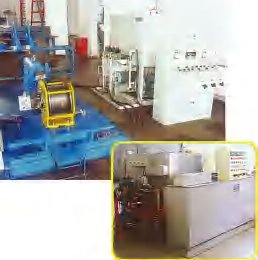
TestingFunctional testing and factory commissioning; every unit checked before shipment

Specifications are as stated by the manufacturer at the time of publication and do not constitute a public offer. Our engineer confirms the exact figures for your configuration after receiving the project data.

On documentation. Technical specifications, drawings, installation and operating manuals are available on request. Approval and certification requirements depend on the country and project — we can provide the relevant technical files and assist with compliance against your requirements.
Comparison

Three types of self-advancing tail

Select the scheme that matches your site conditions.

DWZY1000(800)/1200(Y)
Walking self-advancing tail

Walking Self-Advancing Tail

Tunnel face development. Seven slide blocks, six support cylinders, 4+2 valve, hydraulic lock on every cylinder.

Details →
DWZY
Crawler self-advancing tail

Crawler Self-Advancing Tail

High-output faces: 10 m/day and up. Rapid advance and correct overlap of belt and scraper conveyors.

Details →
Martel
Martel self-advancing tail

Martel Self-Advancing Tail

Narrow tunnel space. Modular construction, 30%+ efficiency gain, built-in hydraulic locks.

Details →

Need a selection for your site?

Send us the conveyor parameters and the route profile — our engineer will prepare specifications and a quotation.

Request Technical Solution
Telegram